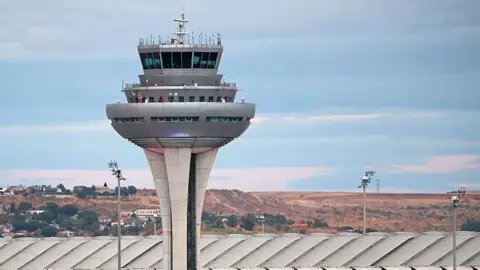
The Spanish government has denied overflight rights to American warplanes engaged in strikes on Iran, as confirmed by Spain's defense minister Margarita Robles.
Official Stance
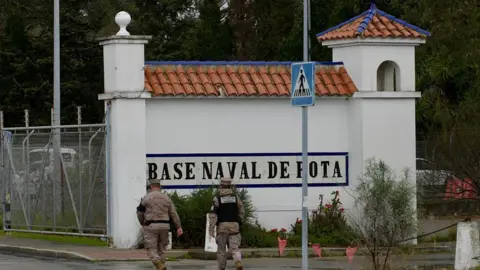
"We are denying the use of the Rota and Morón for any activities associated with the conflict with Iran," Minister Robles stated, noting that Spain had "made this clear to the United States from the outset."
Foreign Minister José Manuel Albares stated the goal of the move was to "refrain from measures that could prompt an expansion in this war."
International Tensions
The United States has so far been silent, but US President Trump has previously threatened to institute a full trade embargo on Spain over its resistance to the conflict.
Firm Position
Since the start of the hostilities in February, the Spain's leader Pedro Sánchez has been a leading critic of the American and Israeli strikes, labeling them "dangerous" and "illegal."
Last month, he confirmed Spain had refused the US use of the two jointly run military bases at Rota and Morón, both in Andalusia.
"Spain is a sovereign nation that refuses to participate in illegal wars," the Prime Minister declared.
Last Wednesday that "all flight plans that entailed actions related to the operation in Iran were denied - all of them, including those of support planes."
Logistical Consequences
Certain American aircraft involved in missions in Iran are operating from the Fairford air base in England, after the UK agreed to a request from the US.
Bombers departing from there will be required to fly around much of the Spanish airspace - either by routing across the eastern Atlantic or over France.
Sources state that aircraft would be permitted to transit through Spain's skies or touch down at the bases in case of a dire need.
Wider Reflections
In a national broadcast, the PM Sánchez spoke about wars in Ukraine and Gaza and said the Spanish government's position could be summed up as "no to war."
Subsequently, the Iranian embassy in Spain indicated Tehran would be responsive to appeals from Madrid about shipping through the critical waterway because Spain was "adherent to international law."
Economic Ramifications
Nearly one-fifth of the world's oil supply typically travels through the strategic strait separating Iran and the tip of the Arabia.
For weeks, the risk of attacks by Iranian drones, missiles has kept it effectively closed, sending oil prices shooting.


